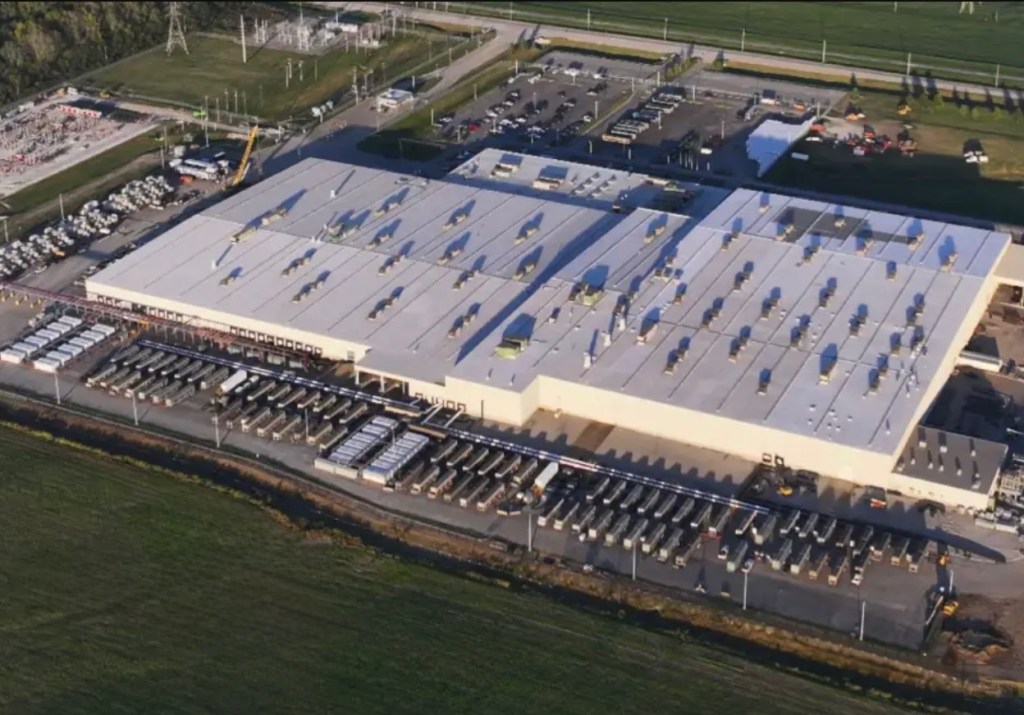
In the relentless pursuit of artificial general intelligence (AGI), xAI has unveiled Colossus 2, a groundbreaking achievement billed as the world’s first gigawatt-scale AI training datacenter. Announced by Elon Musk in May 2025, this colossal infrastructure project in Memphis, Tennessee, builds on the remarkable success of its predecessor, Colossus, and sets an unprecedented standard for AI computation. Designed to power advanced models like xAI’s Grok and accelerate humanity’s quest to understand the universe, Colossus 2 is a technological and engineering marvel. Let’s explore its history, the extraordinary construction effort, its cutting-edge technical specifications, and its transformative potential, enriched with insights from Elon Musk himself.
The Evolution: From Colossus to Colossus 2
xAI, founded in 2023 by Elon Musk to advance human scientific discovery through AI, has quickly become a titan in the AI landscape. The original Colossus supercomputer, launched in September 2024, was a testament to xAI’s audacious vision. Constructed in a mere 122 days in a repurposed factory in Memphis, Tennessee, it housed 100,000 NVIDIA H100 GPUs and consumed 150 MW of power. NVIDIA CEO Jensen Huang described the feat as “superhuman,” noting, “What others take a year to do, xAI did in 19 days.” This rapid deployment showcased xAI’s ability to execute at breakneck speed.
By December 2024, xAI doubled Colossus’s capacity to 200,000 GPUs, incorporating H100, H200, and 30,000 GB200 NVL72 units, with power demands rising to 250–300 MW. Completed in just 92 days, this expansion featured advanced liquid-cooled racks from Supermicro and NVIDIA’s Spectrum-X Ethernet for high-speed connectivity, achieving 99% uptime for training sophisticated AI models like Grok.
The groundwork for Colossus 2 was laid in March 2025, when xAI acquired a 1 million square foot warehouse in Memphis, along with two adjacent 100-acre parcels for future expansion. By May, 168 Tesla Megapacks, valued at over $150 million, were delivered to provide energy storage and backup, ensuring uninterrupted operations. In July 2025, Musk announced that Colossus 2 would integrate 550,000 NVIDIA GB200 and GB300 GPUs, with the first batch operational within weeks. As of September 2025, the project is on track to exceed 1 GW of power capacity and scale to 1 million GPUs by early 2026, potentially creating the largest single AI cluster in history.
Elon Musk emphasized the project’s significance, stating in a July 2025 post on X, “Colossus 2 is a beast unlike anything the world has seen. We’re building the future of AI at a speed no one can match.” This sentiment underscores xAI’s relentless drive to outpace competitors like OpenAI, Meta, and Anthropic, with plans for further expansion, including potential datacenters in the Middle East, signaling a global ambition for AI dominance.
The Construction Feat: Building a Gigawatt-Scale Behemoth
The construction of Colossus 2 is an engineering saga that rivals the scale of its computational ambitions. Starting on March 7, 2025, xAI transformed a massive 1 million square foot warehouse into a state-of-the-art datacenter in record time. The project leveraged Memphis’s strategic advantages, including proximity to the Tennessee Valley Authority (TVA) for power approvals and local incentives that expedited permitting. To meet the aggressive timeline, xAI employed a 24/7 construction schedule, with thousands of workers operating in shifts to install server racks, cabling, and cooling systems.
A critical component was the power infrastructure. To bypass grid limitations, xAI acquired a former Duke Energy plant in Southaven, Mississippi, just across the state line from Memphis. Seven 35 MW gas turbines were installed as a temporary power solution, approved for up to 12 months without full permits, delivering immediate capacity to support early operations. Additionally, xAI invested $24 million in an on-site substation to stabilize grid integration, supplemented by 168 Tesla Megapacks for energy storage and backup. Musk highlighted the scale of this effort, tweeting in May 2025, “Watching 168 Megapacks roll into Memphis feels like assembling an army for AI. Power is the new silicon.”
Cooling such a dense GPU cluster posed another challenge. By August 2025, xAI had installed 119 air-cooled chillers, providing 200 MW of cooling capacity to support approximately 110,000 GB200 NVL72 GPUs. The facility’s design allows for potential vertical expansion, with plans to double the building’s height or adopt non-standard layouts to accommodate more racks. Liquid cooling systems are also in development to handle the intense heat generated by the Blackwell GPUs, ensuring optimal performance as the cluster scales.
The construction pace—achieving 200 MW of operational capacity in just six months—far outstrips industry norms, where competitors like Oracle or Crusoe take 15 months for similar scales. Musk attributed this speed to xAI’s vertical integration, stating in an August 2025 interview, “We’re not just building a datacenter; we’re redefining what’s possible by controlling the full stack—hardware, software, and energy. It’s the Tesla playbook applied to AI.” This approach, combined with partnerships like Solaris Energy Infrastructure for power solutions, has enabled xAI to overcome logistical hurdles and set a new standard for datacenter deployment.
Technical Breakdown: A Powerhouse for AI Innovation
Colossus 2 is not just a datacenter—it’s a technological juggernaut designed to meet the exponential computational demands of frontier AI models. Here’s a closer look at its technical specifications:
Unmatched Compute Power
- GPUs: Starting with 550,000 NVIDIA Blackwell-series GB200 and GB300 GPUs, expandable to 1 million, Colossus 2 delivers compute power equivalent to roughly 50 million H100 GPUs, thanks to Blackwell’s advanced tensor core architecture and improved efficiency.
- Networking: NVIDIA’s Spectrum-X Ethernet provides 3.6 Tb/s bandwidth per server, with a staggering 194 PB/s total memory bandwidth across the cluster, ensuring seamless data flow for massive training jobs.
- Storage: Over 1 Exabyte of storage supports vast datasets for reinforcement learning (RL) and multimodal AI training, critical for models like Grok that process text, images, and more.
- Architecture: Unlike distributed systems, Colossus 2 operates as a single coherent supercluster, minimizing latency and maximizing efficiency for large-scale model training.
Power and Cooling Infrastructure
Powering a datacenter that consumes up to 1.2 GW—enough to power over 1 million U.S. households—requires groundbreaking solutions:
- Power Supply: Beyond the initial TVA grid connection, xAI’s acquisition of the Southaven plant and deployment of gas turbines provide immediate capacity. A joint venture with Solaris Energy Infrastructure (50.1% Solaris, 49.9% xAI) targets 1.1 GW by Q2 2027, with options for 1.5 GW+ through leased turbines and on-site combined-cycle plants.
- Energy Storage: 168 Tesla Megapacks ensure stability during peak AI workloads, preventing costly outages and supporting uninterrupted training.
- Cooling: The initial 119 air-cooled chillers provide 200 MW of cooling capacity, with plans for advanced liquid cooling to manage the heat density of dense GPU clusters as the facility scales.
Engineering and Methodologies
xAI’s vertical integration—combining Tesla’s energy expertise with NVIDIA’s cutting-edge hardware—sets Colossus 2 apart. Supermicro liquid-cooled racks optimize space and efficiency, while xAI’s unique reinforcement learning methodology enhances training efficiency, potentially allowing the company to achieve AGI faster than competitors. Musk emphasized this advantage, stating in a July 2025 post, “Our RL approach is a game-changer. We’re not just throwing compute at problems—we’re smarter about how we use it.”
The project’s construction speed is a testament to xAI’s operational prowess. Achieving 200 MW in six months, compared to competitors’ 15-month timelines, reflects a combination of innovative engineering, strategic partnerships, and a relentless focus on execution.
Challenges and Considerations
Despite its promise, Colossus 2 faces significant challenges:
- Environmental Impact: The gas turbines emit 11.51 tons of pollutants annually, raising concerns about sustainability and prompting xAI to explore cleaner energy options for future phases.
- Supply Chain Risks: Scaling to 1 million GPUs depends on NVIDIA’s production capacity and the availability of gas turbines, both of which face global supply constraints.
- Grid Limitations: Full 1.2 GW capacity may be delayed until mid-2027 due to regional power infrastructure constraints, requiring careful coordination with the TVA and other partners.
Financially, xAI is pursuing a $40 billion raise at a $200 billion valuation, with interest from Middle East sovereign funds, to cover the tens of billions in capital expenditure required. This funding will be critical to sustaining the project’s ambitious timeline and scope.
The Bigger Picture: Why Colossus 2 Matters
Colossus 2 is more than a datacenter—it’s a bold statement about the future of AI. By Q3 2025, it could surpass competitors like Meta and Anthropic in single-cluster compute capacity, positioning xAI as a leader in the global AI race. The project underscores the growing importance of energy infrastructure in AI development, where power availability is as critical as computational hardware.
As xAI scales Colossus 2 and advances models like Grok, it’s paving the way for breakthroughs in scientific discovery and AGI. Musk captured this vision, tweeting in August 2025, “Colossus 2 isn’t just about building bigger—it’s about building smarter, faster, and bolder to unlock the universe’s secrets.” This gigawatt-scale supercluster is a testament to xAI’s ambition to transform our understanding of the world through AI.
 AIComplianceCore
Leave a comment