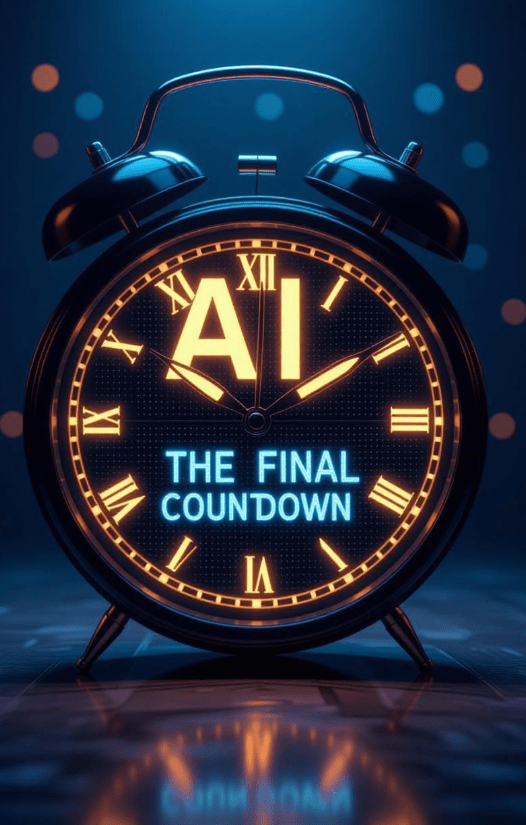
The clock is ticking. Artificial Intelligence (AI), once a sci-fi dream, is now a force reshaping our world at breakneck speed. From self-driving cars to chatbots that mimic human conversation, AI is no longer a distant future—it’s here, and it’s accelerating. But as we stand on the brink of a new era, the question looms: are we ready for what comes next? This is the final countdown to an AI-driven world, and the stakes couldn’t be higher.
The Rise of the Machines
AI’s evolution has been staggering. In the last decade, breakthroughs in machine learning, neural networks, and data processing have propelled AI from clunky algorithms to systems that can write poetry, diagnose diseases, and even beat world champions at chess. Companies like xAI, OpenAI, and Google are pushing the boundaries, creating models that learn, adapt, and reason in ways that blur the line between human and machine intelligence.
Take a moment to consider: AI is already in your pocket. Your smartphone’s voice assistant, your streaming service’s recommendation engine, and even the spam filter in your email—they’re all powered by AI. But this is just the beginning. Experts predict that by 2030, AI could contribute over $15 trillion to the global economy, rivaling the GDP of entire nations. From healthcare to agriculture, no industry is untouched.
The Promise: A World Transformed
Imagine a world where AI eliminates mundane tasks, freeing humans to create, explore, and connect. AI could revolutionize medicine, catching diseases before symptoms appear. It could tackle climate change by optimizing energy grids and predicting environmental shifts with uncanny precision. In education, personalized AI tutors could make learning accessible to billions, leveling the playing field for students worldwide.
This isn’t fantasy—it’s already happening. AI-powered prosthetics are restoring mobility to the disabled. Farmers are using AI to monitor crops, boosting yields while cutting waste. And in disaster zones, AI drones are delivering aid faster than humans ever could. The potential is limitless, and we’re only scratching the surface.
The Peril: A Double-Edged Sword
But here’s the catch: AI isn’t just a tool—it’s a power. And power, unchecked, can spiral out of control. The same algorithms that save lives can be weaponized. Deepfakes threaten trust in media, while autonomous weapons raise ethical nightmares. Bias in AI systems—trained on flawed human data—can perpetuate inequality, as seen in cases where facial recognition misidentifies minorities at alarming rates.
Then there’s the economic fallout. The World Economic Forum estimates that AI could displace 85 million jobs by 2025, even as it creates new ones. The transition won’t be smooth, and entire communities could be left behind. Privacy, too, hangs in the balance—AI thrives on data, and every click, post, or purchase feeds the machine. Who controls this data? Who decides how it’s used?
Perhaps the biggest question is existential: what happens when AI surpasses human intelligence? The concept of “superintelligence” isn’t science fiction—it’s a scenario top minds like Elon Musk and Stephen Hawking have warned about. If AI becomes smarter than us, will it still align with our values? Or will we become passengers in a world we no longer control?
The Countdown: What’s Next?
We’re in the final countdown—not to some apocalyptic end, but to a critical juncture. The decisions we make now will shape AI’s trajectory for decades. Here’s what we need to do:
- Ethics First: AI development must prioritize fairness, transparency, and accountability. This means diverse teams building systems, rigorous testing for bias, and clear rules on data use.
- Global Cooperation: AI doesn’t respect borders. Nations must work together to set standards, prevent misuse, and ensure no one is left behind in the AI revolution.
- Education and Adaptation: We need to prepare workers for an AI-driven economy. That means investing in reskilling programs and fostering creativity—skills AI can’t easily replicate.
- Human at the Helm: AI should amplify human potential, not replace it. We must design systems that keep humans in the loop, especially for high-stakes decisions like healthcare or justice.
The Final Tick
AI is not our enemy, nor is it our savior—it’s a mirror of our ambitions and flaws. The countdown isn’t to doom, but to responsibility. We have the chance to build a future where AI lifts us all, but it won’t happen by accident. It requires vision, courage, and a commitment to steering this technology toward good.
So, as the clock ticks down, ask yourself: what kind of world do we want AI to create? The answer is up to us—but time is running out.
 AIComplianceCore
Leave a comment