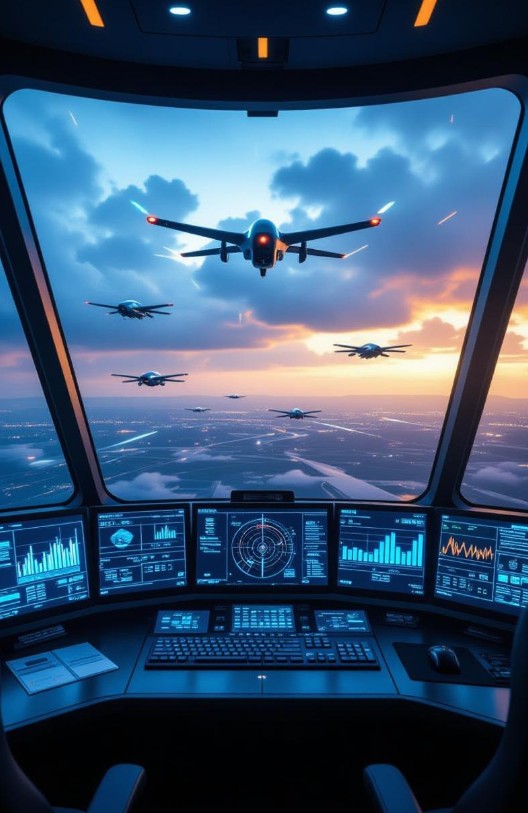
My apologies for the limited blog posts this week, as I’ve been deeply engaged in finalizing my PhD thesis, a challenging but enriching process. I’m thrilled to return with an extensive exploration of a groundbreaking topic: the integration of artificial intelligence (AI) into military aviation. At Eglin Air Force Base in Florida, the United States Air Force (USAF) is pioneering the use of AI-piloted drones like the XQ-58 Valkyrie, as highlighted in a CBS News article from October 5, 2025, by David Martin. This development signals a paradigm shift in air combat, leveraging AI to enhance operational capabilities, reduce risks to human pilots, and address strategic challenges posed by global adversaries. This comprehensive blog delves into the technical intricacies, strategic imperatives, ethical dilemmas, and operational implications of AI in military aviation, drawing from multiple sources to provide an in-depth analysis that spans technological, geopolitical, and societal dimensions.
The XQ-58 Valkyrie: Technical Foundations of AI-Piloted Drones

The XQ-58 Valkyrie, developed by Kratos Defense & Security Solutions, is a cornerstone of the USAF’s Collaborative Combat Aircraft (CCA) program, designed to create affordable, autonomous drones that complement manned aircraft. This unmanned aerial vehicle (UAV) is powered by advanced AI algorithms that enable autonomous flight, navigation, and tactical decision-making. According to Major Trent McMullen, a fighter pilot at Eglin Air Force Base, the XQ-58’s flight dynamics differ from those of human-piloted aircraft. “As humans, we fly very smooth, but it can roll and fly a little bit snappier than maybe a human pilot would,” McMullen told CBS News, reflecting the drone’s ability to execute high-G maneuvers without the physiological constraints faced by human pilots, who are limited by G-forces typically ranging from 7 to 9 Gs in modern fighters.
The XQ-58 measures approximately 30 feet in length—half the size of an F-16—and weighs about 6,500 pounds, making it a compact yet versatile platform. It is powered by a single turbofan engine, reportedly a variant of the Williams FJ33, providing a maximum speed of Mach 0.85 and a range of approximately 3,000 miles, according to a 2025 Defense News report. The drone’s design incorporates stealth features, such as a low radar cross-section, and can carry a payload of up to 1,200 pounds, including sensors, electronic warfare systems, or precision-guided munitions. A significant milestone occurred in August 2025, when a full-scale XQ-58 model took off from a runway, demonstrating its compatibility with standard airfields and reducing reliance on rocket-assisted launches.
The XQ-58’s AI is built on machine learning models trained to perform tasks like intercepting adversary aircraft, using algorithms that mimic the “basic blocking and tackling” of air combat, as McMullen described. These models leverage reinforcement learning, where the AI learns optimal strategies through simulated engagements, and real-time data processing to interpret inputs from radar, infrared sensors, and communication systems. A 2024 Air & Space Forces Magazine article notes that the XQ-58 integrates with the USAF’s Open Mission Systems (OMS) architecture, allowing for modular upgrades and interoperability with platforms like the F-35. This open architecture enables rapid integration of new AI algorithms, ensuring the drone remains adaptable to evolving threats.
Manned-Unmanned Teaming: Technical and Operational Synergy
General Adrian Spain, head of Air Combat Command, envisions a future where AI-piloted drones operate seamlessly alongside manned aircraft through manned-unmanned teaming (MUM-T). This concept involves drones executing high-risk missions—such as penetrating enemy air defenses or conducting electronic warfare—while human pilots maintain strategic oversight. Spain told CBS News, “You’ve told them to go out in front and to execute an attack on a complex set of targets, and they will do that,” highlighting the drones’ ability to autonomously execute predefined mission profiles.
The technical foundation of MUM-T lies in advanced communication systems and AI-driven autonomy. The XQ-58 uses secure data links, such as the Link 16 tactical data network, to share real-time information with manned aircraft and command centers. A 2025 Military & Aerospace Electronics article details how these drones employ software-defined radios and satellite communications to maintain connectivity in contested environments, where jamming and electronic warfare are prevalent. The AI’s decision-making process is governed by a combination of rule-based systems and neural networks, which analyze sensor data to identify targets, assess threats, and prioritize actions based on mission objectives.
A pivotal demonstration of AI’s capabilities occurred in the Defense Advanced Research Projects Agency’s (DARPA) Air Combat Evolution (ACE) program. In 2024, DARPA reported that an AI-piloted F-16, retrofitted with a plug-and-play AI system, competed effectively in a simulated dogfight against an experienced human pilot. These F-16s feature a “human-in-the-loop” configuration, where a safety pilot monitors the AI’s performance and can intervene if necessary. McMullen explained that once the AI is engaged, “the hands come off,” but the human pilot remains ready to assume control, ensuring a balance between autonomy and oversight.
The AI’s advantage stems from its ability to process data at speeds unattainable by humans. Modern air combat generates terabytes of data from sensors, radar, and communication systems, overwhelming even the most skilled pilots. “A human out in a complex air combat environment, there’s just no way to absorb all of it,” McMullen noted. AI systems, however, can fuse data from multiple sources—such as synthetic aperture radar, electro-optical sensors, and signals intelligence—using algorithms like Kalman filters for sensor fusion and Bayesian networks for decision-making. This enables the AI to detect threats, predict adversary movements, and execute maneuvers in milliseconds, as detailed in a 2025 Aviation Week report.
Strategic Imperatives: Addressing Global Threats
The integration of AI into military aviation is driven by strategic necessity, particularly in response to the growing capabilities of adversaries like China and Russia. Retired Air Force Lt. Gen. Clint Hinote emphasized the challenges of operating in contested regions, such as the Indo-Pacific, where China’s proximity to potential conflict zones provides a numerical advantage. “If we have to fight China, we’re likely doing it in their front yard,” Hinote told CBS News, noting that the USAF must achieve kill ratios of 10 to 1, 15 to 1, or even 20 to 1 to remain competitive. Current war games, however, suggest that the U.S. would struggle, with Hinote admitting, “The war games don’t turn out very well. We lose.”
China’s advancements in AI-driven military technologies are a significant concern. A 2025 article in The National Interest highlights China’s development of autonomous drones, such as the GJ-11 stealth UAV, which is designed for reconnaissance and strike missions. The GJ-11, equipped with AI for target recognition and path planning, complements China’s J-20 stealth fighter, creating a formidable air combat capability. Russia, meanwhile, is advancing its Okhotnik drone, which integrates with the Su-57 fighter, as reported by a 2025 article in The Diplomat. These developments underscore the urgency of the USAF’s efforts to maintain air superiority.
AI drones like the XQ-58 offer a cost-effective solution. Priced at $20-30 million per unit—compared to over $100 million for an F-35—they enable the Air Force to field larger numbers of aircraft. Hinote noted, “You could buy more airplanes, put them in the field, and still not break the bank.” Their expendable nature allows commanders to deploy drones in high-risk scenarios, such as penetrating integrated air defense systems (IADS) equipped with surface-to-air missiles (SAMs) like Russia’s S-400 or China’s HQ-9. A 2025 Breaking Defense report emphasizes that AI drones can be used for “decoy” missions, overwhelming enemy defenses with swarms of low-cost platforms.
Peacetime Applications: Versatility Beyond Combat
While designed for wartime scenarios, AI drones have significant peacetime applications. General Spain told CBS News that their potential is “pretty wide open.” For instance, they could intercept foreign aircraft approaching U.S. airspace, such as Russian Tu-95 bombers off Alaska. A 2024 CNN report described a Russian fighter rocking an American F-16 during such an intercept, highlighting the risks of these missions. AI drones could perform these tasks without endangering human pilots, maintaining a robust defensive posture.
Other applications include intelligence, surveillance, and reconnaissance (ISR), as well as disaster response. A 2025 Aviation Week article notes that AI drones equipped with high-resolution cameras, synthetic aperture radar, and signals intelligence payloads can monitor border regions, track maritime activity, or assess damage in disaster-stricken areas. Their ability to operate autonomously for extended periods—up to 20 hours for the XQ-58—makes them ideal for persistent surveillance missions. The USAF plans to field 150 AI-piloted aircraft by 2030, with a long-term goal of 1,000, according to Defense News, reflecting their versatility across operational contexts.
Ethical and Operational Challenges: Navigating Autonomy and Trust
The integration of AI into military aviation raises profound ethical and operational challenges, particularly regarding autonomy in life-or-death decisions. General Spain was unequivocal: “Absolutely not. The human who’s controlling the AI will make the life-or-death decisions.” However, Lt. Gen. Hinote noted that militaries worldwide face pressure to grant AI greater autonomy, with the U.S. investing in experiments to develop platforms capable of firing autonomously if authorized. A 2025 Center for Strategic and International Studies (CSIS) report warns that fully autonomous systems risk unintended escalations due to errors or misinterpretations, citing AI’s susceptibility to “hallucinations”—false outputs caused by flawed data or algorithms.
The technical challenge of ensuring AI reliability is significant. AI systems rely on machine learning models trained on vast datasets, but these models can be vulnerable to adversarial attacks, where inputs are manipulated to deceive the AI. A 2025 IEEE Spectrum article details how adversarial machine learning can trick AI into misidentifying targets, a critical concern in combat scenarios. The USAF is addressing this through rigorous testing, including simulations at Eglin Air Force Base where AI drones face human pilots in realistic scenarios. These tests refine algorithms, ensuring they can handle edge cases and dynamic environments.
Cybersecurity is another critical concern. AI drones must be protected against hacking and electronic warfare, which could disrupt their operations or turn them against friendly forces. A 2025 Breaking Defense report highlights the growing threat of cyberattacks, noting that China and Russia are developing advanced electronic warfare systems, such as the Krasukha-4, capable of jamming UAV communications. The USAF is investing in quantum-resistant encryption and secure data links to mitigate these risks, as detailed in a 2025 Military & Aerospace Electronics article.
Building trust in AI systems requires extensive validation. The USAF is using digital twins—virtual models of drones like the XQ-58—to simulate thousands of scenarios, identifying weaknesses and optimizing performance. A 2025 Air Force Technology report emphasizes the role of digital engineering in accelerating AI development, allowing the USAF to test algorithms in virtual environments before deploying them in real-world missions.
The Global Race for AI-Driven Air Superiority
The development of AI in military aviation is part of a broader global race for technological dominance. China’s GJ-11 and Russia’s Okhotnik are just two examples of autonomous systems being developed by adversaries. A 2025 report in The Diplomat notes that China’s AI drones use deep learning for autonomous target recognition, leveraging neural networks trained on massive datasets of satellite imagery and radar signatures. Russia’s Okhotnik, meanwhile, incorporates AI for cooperative engagement with manned aircraft, similar to the USAF’s MUM-T concept.
This competition underscores the need for the USAF to accelerate its AI programs. DARPA’s ACE program and the USAF’s Autonomous Air Combat Operations (AACO) initiative are driving innovation, with a focus on developing AI that can operate in contested environments with denied GPS and communications. A 2025 DARPA press release highlights advancements in “explainable AI,” where algorithms provide human operators with insights into their decision-making processes, enhancing trust and accountability.
Societal and Ethical Implications: A Broader Perspective
The integration of AI into military aviation raises broader societal and ethical questions. Public perception of autonomous weapons systems is mixed, with concerns about accountability and the potential for misuse. A 2025 Brookings Institution report calls for international agreements to govern autonomous weapons, emphasizing the need for clear rules on human oversight. The USAF must balance innovation with ethical responsibility, ensuring that AI systems are transparent and accountable.
The societal impact extends to the workforce. AI drones could reduce the demand for human pilots in certain roles, raising questions about the future of military aviation careers. However, they also create opportunities for new roles, such as AI system operators and data scientists, as noted in a 2025 RAND Corporation study. The USAF is investing in training programs to prepare personnel for these roles, ensuring a smooth transition to an AI-augmented force.
The Future of Air Combat: A Revolution Unfolding
The integration of AI into military aviation is a revolution in progress, with the potential to redefine air combat for decades to come. General Spain described it as having “the potential to be a revolution,” a sentiment echoed by experts across the defense community. The USAF’s vision includes a seamless partnership between manned and unmanned systems, where AI drones enhance human capabilities and enable new operational concepts, such as swarming tactics and multi-domain operations.
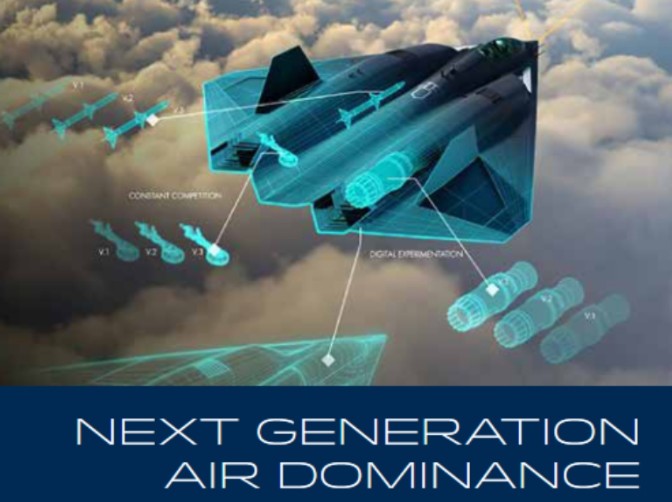
The technical challenges are substantial, requiring advancements in AI algorithms, cybersecurity, and system integration. The USAF is collaborating with industry partners like Kratos, Boeing, and General Atomics, as well as academic institutions, to drive innovation. Programs like DARPA’s ACE and the USAF’s Next Generation Air Dominance (NGAD) initiative are pushing the boundaries of AI-driven aviation, with a focus on developing systems that can operate in GPS-denied environments and resist electronic warfare.
For pilots like Major McMullen, the transition to flying alongside AI is both a challenge and an opportunity. “If I can send an uncrewed asset into a high-risk environment, I’d rather do that than send a human pilot,” he told CBS News, reflecting the strategic value of AI drones. As the USAF continues to test and refine these systems through simulations, test flights, and real-world experiments, it is shaping a future where AI and human pilots work together to meet the challenges of a rapidly evolving global security landscape.
Conclusion: Shaping the Future of Air Superiority
The skies over Eglin Air Force Base offer a glimpse into a future where “Top Gun AI” is not just a concept but a reality. The integration of AI into military aviation represents a paradigm shift, driven by technological innovation and strategic necessity. By leveraging AI’s ability to process vast amounts of data, make rapid decisions, and execute high-risk missions, the USAF aims to maintain its edge over adversaries like China and Russia.
This revolution is not without challenges. Ensuring AI reliability, addressing cybersecurity threats, and navigating ethical concerns will be critical to its success. The USAF must also engage with the public to build trust in AI systems, ensuring that their development aligns with societal values. As the global race for AI-driven air superiority intensifies, the USAF’s ability to harness this technology will determine its ability to project power, deter threats, and protect national interests in the 21st century. The question is not whether AI will transform military aviation but how quickly and responsibly this transformation will unfold.
 AIComplianceCore
Leave a comment