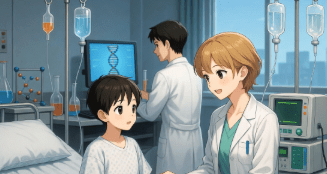
In the rapidly evolving world of advanced therapeutics, gene therapy stands as a beacon of hope for children facing rare genetic diseases. Yet, as science races ahead, ethical questions loom large: How do we balance innovation with equity? How do we ensure families aren’t burdened by misconceptions or financial strain? Today, I had the privilege of attending a compelling panel hosted by the Working Group on Pediatric Gene Therapy and Medical Ethics (PGTME), housed within the Division of Medical Ethics at NYU Grossman School of Medicine. Formed in 2019 and funded by Parent Project Muscular Dystrophy, PGTME brings together bioethicists, clinicians, industry leaders, lawyers, and patient advocates to tackle these very issues.
The panel, part of a broader webinar series, delved into the mission of PGTME: advancing research, policy, and education on ethical challenges in pediatric genetic interventions. Topics ranged from trial design and patient autonomy to surrogate decision-making, lived experiences, and equitable access to therapies like antisense oligonucleotides (ASOs) and gene editing tools. With science outpacing certainty, as one speaker aptly noted, ethics isn’t a checklist—it’s a compass guiding us through uncharted territory.
The Panel: Voices of Expertise and Empathy
Moderated by Andrew (Speaker 3), the discussion featured insights from Liza (Speaker 4) and Aiden (Speaker 2), among others. Liza, working on advanced therapeutics pathways at her institution, emphasized collaborative frameworks to deliver therapies ethically to diverse families. “We’re trying to think about frameworks that meet a diverse set of families living with these conditions,” she said, addressing the “hope and hype” that can overwhelm parents weighing options.
The conversation highlighted connection as a recurring theme: between clinicians and families, science and society, promise and peril. Aiden wrapped up by thanking attendees for thoughtful questions and plugging the next panel on evidence and approval in rare diseases. Andrew’s closing words resonated: “Ethics lives in conversations… in the courage of patient advocates… and in the humility of scholars.” It was a reminder that gene therapy challenges us to keep human connections at the center.
Key Questions and Ethical Tensions
The Q&A session sparked rich dialogue, reflecting real-world dilemmas. Attendees raised concerns about therapeutic misconception—the risk that families view experimental trials as guaranteed cures rather than research aimed at generalizable knowledge. One anonymous question noted how principal investigators (PIs) sometimes overhype early preclinical work, leading parents to believe “a few million dollars” will unlock a cure. As external research underscores, this misconception is prevalent in early-phase gene transfer trials, where up to 50% of consent forms use ambiguous language that blurs research and therapy.
Funding emerged as another flashpoint. Families often fundraise or travel great distances for treatments, arriving with preconceived hopes that complicate informed consent. An attendee asked: “Can you comment more on the funding landscape in rare disease and how this shapes the relationship between patient families and clinician scientists?” Panelists acknowledged the perception that parents “must give up everything,” but stressed collaborative pathways—like those at SickKids and Liza’s institution—to foster equity without competition.
Rafa Escandon pushed for “precision and restraint in language,” asking which stakeholders can promote humility without seeming pessimistic. Jordana Holovach advocated for patient/family representatives in IND/protocol/IRB processes, drawing from her experience as head of community at a gene therapy sponsor—her son was the first patient in a 1998 trial for a rare pediatric genetic brain disease.
Stéphane Auvin queried phrasing to prevent therapeutic misconception, while Nubia asked about a forthcoming book on the topic. These exchanges echoed PGTME’s focus on lived experiences, as explored in their subgroup’s work.
Broader Context: The Scale of the Challenge
Rare diseases paint a stark picture. Globally, over 10,000 rare diseases affect 400 million people, with 80% genetic in origin and half striking children. In the U.S., rare diseases impact 30 million, yet only 5% have FDA-approved treatments. Pediatric cases are especially urgent: about 50% of rare disorders manifest in childhood, often as ultra-rare conditions (prevalence <1 in 100,000) like spinal muscular atrophy or inborn errors of immunity.
To visualize the burden:
This chart illustrates the genetic predominance, underscoring why gene therapies—replacing faulty genes via viral vectors or editing tools like CRISPR—are transformative. Since 2017, five gene therapies have gained U.S. approval, with over 900 in development, many targeting pediatric rarities. PGTME’s efforts, detailed in their 2022 Annual Report, amplify this through multistakeholder dialogues on risks, benefits, and community engagement.
Ethical domains from PGTME’s work and broader literature include:
| Ethical Domain | Key Challenges | PGTME Focus |
|---|---|---|
| Risk/Benefit Assessment | Uncertain long-term effects in kids; immunogenicity/toxicity | Trial design balancing hope with evidence |
| Fair Participant Selection | Prioritizing severe cases without bias | Equity in access, avoiding “lottery” systems |
| Community Engagement | Informed consent for minors; surrogate decisions | Lived experiences subgroup; operationalizing consent |
This table distills core issues, drawing from PGTME’s conference series on topics like equity and consent.
The Funding Frontier: Promise and Peril
The 2025 funding landscape for rare disease gene therapies is dynamic but daunting. The market is projected to surge from $9.74 billion in 2025 to $24.34 billion by 2030, fueled by approvals and tech advances. Yet, high costs—up to $2.1 million per treatment—exacerbate inequities. Crowdfunding and foundations like Parent Project Muscular Dystrophy fill gaps, but as one attendee noted, fundraising can entrench power imbalances between families and scientists.
NIH and FDA’s Bespoke Gene Therapy Consortium (BGTC), launched in 2025 with $76 million from public-private partners, aims to streamline trials for ultra-rare diseases. Venture funding hit $15 billion in 2024, with CDMOs (contract development/manufacturing organizations) capturing 87.8% market share by 2035.
Here’s a snapshot of growth:
Projections assume a ~20% CAGR, highlighting scalability via partnerships. Still, ethical guardrails are essential to prevent therapies from widening divides.
Looking Ahead: Ethics as the Guiding Light
This panel wasn’t just discussion—it was a call to action. As gene therapies like Zolgensma (for SMA) prove curative for some, we must ensure they’re not luxuries for the few. PGTME’s multidisciplinary approach, from annual reports to lived experience research, models how to integrate voices often sidelined.
For families, the takeaway: Engage advocates like Jordana’s team early. For researchers: Embrace humility in language to combat misconceptions. And for all: Support initiatives like BGTC to democratize access.
The week’s lineup promises more—register for tomorrow’s rare disease evidence panel here. In a field where “connection” is the thread, let’s weave a tapestry of ethical progress.
Sources and Further Reading:
 AIComplianceCore
Leave a comment